
When Britain Stopped Building: Our Greatest Economic Blunder
Britain went from a country where working people could live independently, with money left over to live their lives, to one where a caravan might be the last affordable form of shelter. Explore how this happened.
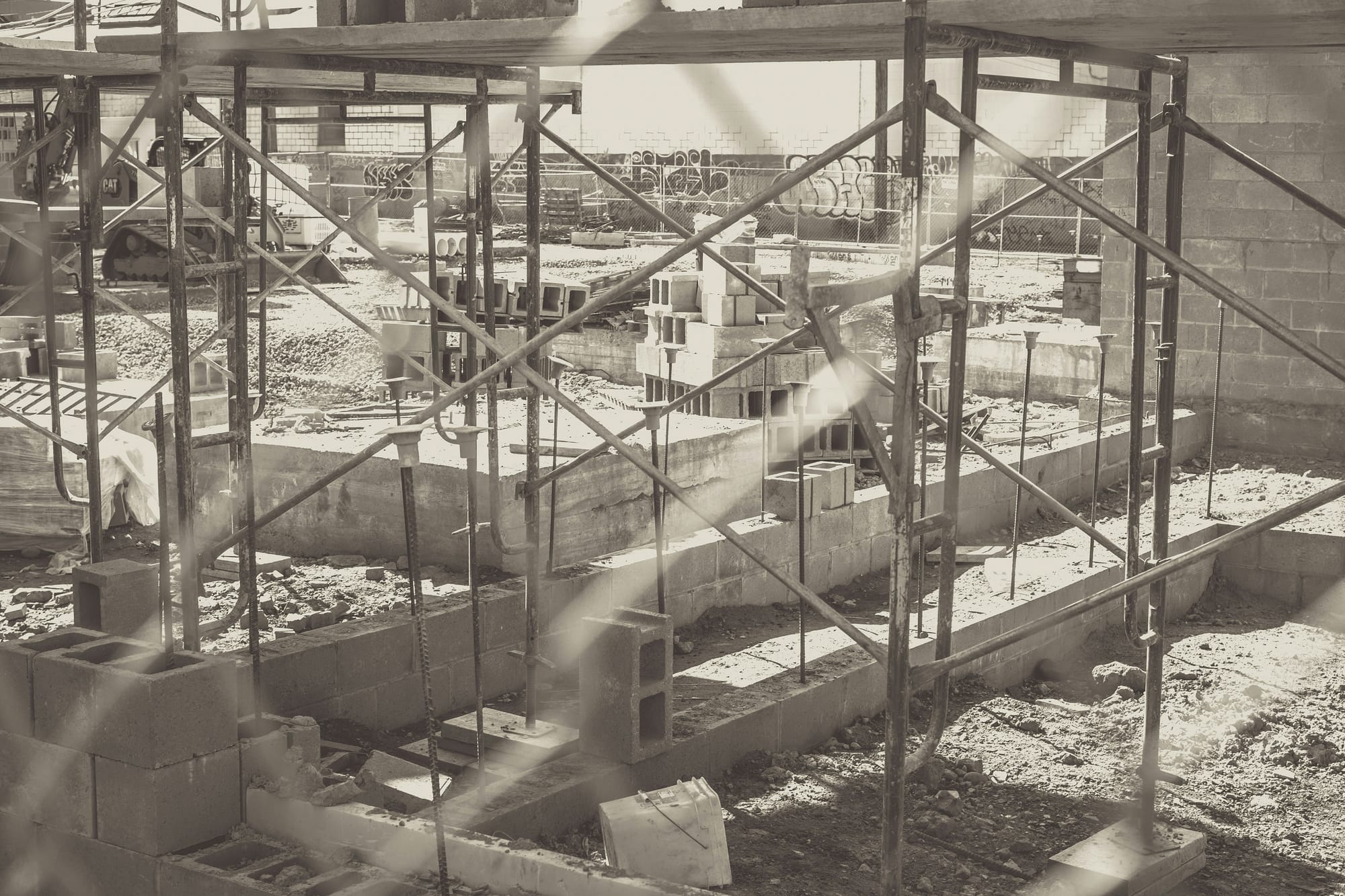
When I first moved to London, with big dreams and big hopes, the first knockback to my drive was one many of the capital’s residents had been complaining of for a long time: the cost of renting. I had moved from a seven-hundred-square-foot, two-bedroom home costing a mere £700 a month, to a flat less than four hundred square feet in size and costing £1,535 per month. It was quite the shock, my budget tightened and my quality of life reached lows I’d never imagined it could.
I had gone from paying roughly £1 per square foot of home to around £4 per square foot; a truly oppressive change.
At the time, that rent alone consumed around 70% of my take-home pay, and roughly 36% of my partner’s and my combined household income. Thank God she worked as much as I did, and that we didn’t have children. And that was before bills were added on top. Three years later, when we finally decided to get out of that declining city, the rent had risen to almost £1,700 per month. Our wages hadn’t budged.
Enough was enough. We weren’t going to frit away every penny we earned on a broom cupboard any longer.
Imagine our dissatisfaction, then, when we headed home only to discover that the very plague we were trying to escape had begun spreading across the rest of the country as well. I certainly had some choice words for my old landlord the day I discovered that, in just three years, the very flat I had rented before moving to London now cost almost £1,100 per month.
These experiences are what made it so surprising to me that my research into Britain’s economic past uncovered a startling fact: many average working people once paid as little as 6–9% of their annual income in rent.
For clarity, that meant paying £2.04 per week, or £106.42 per year, when wages stood at £23.91 per week, or £1,247.38 per year, in 1969.
That discovery raised a simple but uncomfortable question: how did our country go from a place where working people could live independently, with plenty of money left over to actually live their lives, to one where a caravan might be the last remaining affordable form of shelter?
The Bevan New Towns Act 1946
Our nation has over a thousand years of recorded history, and on some issues it is possible to trace cause and consequence all the way back to the days of William the Conqueror. On others, however, history does us the courtesy of clearly marking the beginning and end of a chapter. Britain’s post-war housing boom, and the later collapse of that system, benefits from such a demarcation: the end of the Second World War in 1945.
By the war’s conclusion, more than 218,000 homes in the UK had been completely destroyed or damaged beyond repair. A further 250,000 had been rendered uninhabitable, and some estimates place the total number of damaged homes as high as 3.75 million. At the same time, almost 5 million servicemen and women were returning from military posts to civilian life, all in need of both work and shelter.
We mustn’t forget, however, that this was not merely a housing crisis. Women’s rights were advancing rapidly, and the millions of women who had taken on industrial and professional roles during the war showed little appetite for returning to pre-war domestic confinement. Young people, who made up much of the returning military force and had already sacrificed their formative years to fighting the enemy, found themselves in urgent need of trades, skills, and long-term employment. Competition in the labour market intensified and housing availability had collapsed.
It was a landscape not entirely unlike today, though the root causes differ. We now face intense competition in the jobs market driven by automation, offshoring, an excessive reliance on imported labour, and decades of under-investment in domestic training and skills. Meanwhile, wage stagnation has normalised the two-working-parent household resulting in far fewer people taking up domestic life. At the same time, we suffer from a severe housing shortage, not because our homes were destroyed by a foreign enemy, but because we have failed, for decades, to build enough to meet demand.
Yet the underlying challenge is strikingly similar: a need to generate vast numbers of jobs, and a need to provide millions of homes.
Comparing present-day Britain to post-war Britain is not an exercise in pessimism. If anything, it is hopeful. Post-war Britain solved both problems simultaneously. It rebuilt its housing stock at scale while absorbing a massive labour surplus into productive, skilled employment. If it was possible then, it stands to reason that it is possible again.
The most striking difference between Britain in 1945 and Britain in 2025 is one of attitude.
The country was then in the hands of what is often called the Greatest Generation, a cohort that, in retrospect, can reasonably be described as among the most egalitarian Britain has ever produced. They had watched one another fight, bleed, and die. They had seen their children grow up to the sound of sirens and falling bombs. From that shared experience came a simple conclusion: that everyone had earned the right to something better. They set about rebuilding the country with that belief firmly in mind; a better Britain for everyone.
That outlook materialised in the form of the New Towns Act 1946, introduced by the Attlee government (Labour) and championed by Aneurin Bevan. Crucially, it did not remain a partisan project. The principle behind it, that building homes at scale was good economics as well as good social policy, was accepted across successive governments of both parties for decades to come.
Each administration left its own mark. Winston Churchill’s (Conservatives) Town Development Act 1952 shifted emphasis toward expanding existing towns during his second term. The balance between central direction and local control oscillated under Harold Macmillan’s (Conservatives) New Towns Act 1959 and later Harold Wilson’s (Labour) New Towns Act 1965. But the underlying consensus endured: building homes was not a burden on the economy. It was good, sensible business.
Local authorities were placed at the centre of delivery. Between 1946 and 1980, councils were responsible for roughly half of all new homes built in the UK, maintaining steady construction capacity, stable employment, and long-term planning horizons.
The results were transformative. By 1979, Britain’s housing stock had nearly doubled, reaching around 20 million dwellings, of which approximately 32% were social homes. Rents were low by historical standards, housing costs consumed only a modest share of income, and renters were able to retain enough of their take-home pay to save toward ownership within realistic, motivating timeframes.
Housing was not cheap because people earned more. People were able to earn, save, and invest because housing was cheap.
The Multiplier Effect
The beauty of the New Towns programme lay in its simplicity and affordability. It relied on mechanisms such as empowering development corporations, corporations set up by central government to build the new towns, with master-planning authority and compulsory purchase powers and then backed them with Treasury-backed borrowing. The government would pre-approve a site and provide the funds allowing the development company to bypass fragmented local planning constraints so they could build at speed. With such an efficient design, it is little surprise that 10,472,253 homes were built between 1946 and 1980 in across the UK, with construction peaking at 425,830 homes in 1968.
It is easy to see how such an approach resolved the immediate post-war housing crisis. What is less often discussed is its profound impact on employment and economic growth.
It doesn’t take a genius to understand that mass housebuilding generated vast numbers of direct jobs: tradespeople, labourers, planners, architects, surveyors, and civil engineers. But this was only the first layer of economic impact. Construction is uniquely powerful because it activates a deep and broad supply chain, creating demand across dozens of industries simultaneously. Brickworks, timber mills, steel and glass manufacturers, plaster producers, kitchen and utility suppliers, toolmakers, and haulage and logistics firms all expanded in response to sustained, large-scale building programmes.
These effects did not remain confined to construction and manufacturing. Workers employed directly and indirectly through housebuilding spent their wages locally, supporting shops, services, and town centres. Developers sourced materials nearby, suppliers expanded payrolls, and local economies benefited from rising demand. This is the multiplier effect in action: each pound spent on building circulated repeatedly through the domestic economy, generating additional output, employment, and tax revenue at every turn.
It is therefore no coincidence that the decades in which Britain built at scale were also decades of strong economic performance. During the 1960s, average GDP growth stood at around 3.5% per year, a figure that seems fanciful to today’s economists. While housebuilding was not the sole driver of that growth, it played a crucial supporting role by absorbing labour, sustaining domestic industry, and ensuring that household incomes were not consumed by rent.
This is what happens when millions of people are employed domestically, doing productive work that meets domestic needs: economic growth becomes a consequence, not an aspiration.
One might reasonably expect that, in the decades that followed, with advances in construction technology, improved logistics, and an expanding higher-education system, housebuilding output would have surpassed post-war levels with ease. Instead, the opposite occurred.
In the 35 years prior to 1980, the UK delivered an average of 299,207 homes per year. In the 35 years that followed, that figure collapsed to just 188,776 homes per year, a reduction of nearly 40%. This decline was not a temporary dip, but a structural shift that has endured for decades.
What is perhaps most surprising is where this collapse occurred. Many assume that private enterprise simply “failed to build”. The truth is that private developers have constructed a similar number of homes per year every year for the last 80 years.
There are three primary sources of new housing supply in the UK: private enterprise, social housing developers (housing associations), and local authorities. Between 1946 and 1980, private enterprise built an average of 137,160 homes per year. In the 35 years that followed, that figure barely changed, averaging 153,999 homes per year.
The collapse came elsewhere. Social housing developers fell from an average of 167,246 homes per year between 1946 and 1980 to just 34,915 per year thereafter. Local authority housebuilding suffered an even more dramatic decline, dropping from a respectable 149,399 homes per year to a horrifying 10,565.
In short, it was the withdrawal of state-backed housebuilding, not a failure of private enterprise, that throttled housing supply. The private sector continued to operate at broadly the same output level it had sustained since the 1950s. What disappeared was the public capacity that once doubled national output.
While comprehensive employment figures for the earliest post-war decades are limited, construction employment has clearly declined since the early 2000s in line with reduced housing output, with modest job growth returning only during periods of increased building. The direction of travel is unmistakable: when homebuilding was cut almost in half, employment in construction and its supply chains fell accordingly. If our meagre construction output employs 2.4 million people today, it might be safe to conclude that as many as 1.6 million jobs could be generated by reaching output levels of previous decades.
When Britain stopped building, it did not merely abandon homes. It surrendered hundreds of thousands, maybe over a million, stable, domestic jobs tied directly and indirectly to housing construction.
What Happened?
So why would a country with a growing population and an economic system demonstrably strengthened by large-scale housebuilding choose to abandon it?
The answer lies not in economics, but in politics and attitude. Welcome to Britain’s troubled era marked by the decline of egalitarian thinking and the rise of a new governing philosophy, Neo-Liberal Elitism, that prioritised individual asset accumulation, market primacy, and local resistance to development over the benefit of working people and future generations. It was during this period that the political and cultural foundations of modern NIMBYism took hold.
The generation that built the New Towns system had been preoccupied with what was good for all. The generation that dismantled it was increasingly concerned with what was good for the self. This ideological pivot was most clearly embodied by the government of Margaret Thatcher (Conservatives), whose administration formalised and accelerated a shift already underway.
The post-war settlement of the 1950s, 60s, and 70s was explicitly designed to benefit working people. Land value was determined by its social utility rather than the speculations of its owners. Housing was treated as economic infrastructure, something the state shouldn’t necessarily provide, but should ensure was available and affordable to those who contributed to society. Large-scale public housebuilding acted as a check and balance for private rents, reducing housing insecurity, and strengthening workers’ bargaining power (just look at the amount of strike action in the 50s and 60s and you’ll see the power that not having to fear homelessness will give you). Inflation was absorbed through wages rather than through rents and housing costs, protecting workers during periods of economic strain and placing the burden in the hands of employers and landowners instead.
This system was not built on a promise of socialist equality, but on egalitarian equivalence: the belief that everyone should have access to the foundations of a decent life. It did not suggest that people should receive something for nothing, but that class, status, and inherited wealth should not determine access to security, dignity, freedom or joy.
Equally important was where economic power sat. Large-scale construction in the hands of local authorities gave those authorities capital, and capital provided independence and resilience. The emerging neoliberal model reversed this logic. It was underpinned by a “we know best” approach to governance. Economic power was centralised, public capacity deliberately reduced, and decision-making increasingly deferred to markets and asset holders.
This shift prioritised the rights of capital over the needs of communities. It was a system built to reward those who already had wealth and access to assets, all the while leaving those who did not exposed to the whims of a market they could neither control nor escape. The result was not efficiency nor growth, but rather economic fragility and the knock-on effects on our political culture can still be felt today in the increasing prevalence of point-scoring, finger-pointing, and division that has replaced our collective problem-solving attitude.
Under Margaret Thatcher, the New Towns model was not dismantled by any single dramatic act, nor amid great public controversy or with any fanfare. It was instead allowed to wither through neglect. No new development sites were designated, no land was acquired, and no new development corporations were established. Those that remained were gradually wound down. National master-planning ceased, and with it the state’s direct role in large-scale housing development. As we already know, private developers did not respond by increasing output. Nor could they realistically have done so. Housing delivery was now funnelled almost entirely through a local planning system, a system already prone to delay, fragmentation, and NIMBY opposition. The capacity that had once doubled national housing output simply disappeared.
Alongside this abandonment came the Right to Buy policy, presented as a boon to working people, an opportunity to purchase a council home at a substantial discount and gain a foothold on the property ladder. In the short term, many individuals benefited. In the long term, the policy was structurally destructive.
The less discussed but more consequential element was the introduction of capital controls on local authorities, the real killer of the New Towns model. Councils were prohibited from using the proceeds of sales to replace the homes they had lost. Instead, receipts were largely required to pay down historic debt incurred in building the stock in the first place. Sales vastly outpaced replacement. With no new supply entering the pipeline and population continuing to grow, rising prices and deepening shortages were inevitable, and as we all know, they duly followed.
In the 1990s, The Britian that emerged at the end of the Thatcher government had undergone a profound transformation. Around two million social homes had been sold off, roughly matching the total number of homes built during the Thatcher era itself. Social housing had ceased to function as a stabilising pillar of the market. Housing development was now overwhelmingly dependent on private builders and almost entirely funnelled into the burdensome local planning process.
For those born into this new Britain, the logic of this shift can be difficult to grasp, particularly given today’s political fixation on low productivity and housing shortage. With the benefit of hindsight, the approach appears deeply counterproductive if not entirely insane. But that judgement rests on a misunderstanding of priorities. The emerging neoliberal settlement was never primarily concerned with national growth or economic balance. Its focus lay elsewhere: asset appreciation, market primacy, and the consolidation of economic power.
By the time Thatcher left office, housing had ceased to be treated as infrastructure and had become an asset. Land value was no longer determined by social use, but by speculative return. Working people’s housing security had been weakened and their bargaining power diminished. The construction industry massively contracted and with it went a major economic engine, one that had underpinned Britain’s growth for more than three decades.
Why hasn’t anyone fixed it?
Naturally, your next question, just as mine was, would be: well, that’s all very well, but Thatcher was 35 years ago and the problem has existed the entire time, so why hasn’t anyone done anything about it?
You’re right to ask, and the answer is most disappointing.
The reason this ugly, economy-killing issue hasn’t been addressed comes down to a simple fact: our current political class lacks the political bravery to challenge the new neo-liberal norm. It is as simple as that. Politicians are fearful of the short-term upset that fixing this issue would have on the asset values of homeowners, and so instead they have passed the cost of doing nothing down from one generation to the next, until this, our newest wave of young people, are growing up in a world where housing shortages and quality-of-life-throttlingly high rents have become a mistakenly accepted reality.
Now, here at The Common Burden, we are not fans of finger-pointing or party politics. For that reason, we won’t lay blame solely at the Thatcher-era government. So, let’s look at how each successive government failed to do anything about this issue.
The John Major (Conservative) government is perhaps the most forgivable for its inaction. They inherited the housing market crash that Thatcher had been juggling throughout the 1980s.
Reduction in construction rates had naturally led to an unsustainable rise in house prices, as supply dwindled while demand continued to increase. This was coupled with the shrinking in many of the trades, contributing to early pressures on wages. This was a deliberate move to artificially inflate the value of property assets, and it was always going to be turbulent. The sharp increase in housing costs inevitably led to the first major dips, as new buyers could no longer raise the necessary capital to purchase. Sales diminished, and values dropped sharply.
Thatcher responded with short-term solutions: dismantling the post-war credit controls, deregulating the banks, and increasing the supply not of housing, but of credit, while at the same time shrinking the affordable supply of social housing through the Right to Buy scheme. This delayed the inevitable housing market crash for a few years, but it did not prevent it. It was a fundamentally fragile system, subject to the whims of interest rate rises, and it inevitably resulted in the crash that coincided with the end of the Thatcher era and the beginning of the Major government.
Major inherited the wreckage. The generation of new homeowners in the 1980s were the first to be heavily laden with mortgage debt, and a new threat to the cost of living was introduced: negative equity. The crash saw house prices falling sharply, hundreds of thousands of households pushed into negative equity, and repossessions becoming widespread. The banks themselves were vulnerable.
As a result, there was little appetite to pile on top of this an increase in housing supply that would inevitably drive prices even lower and further punish those already burdened during the Thatcher era. Stabilisation was required before any action could be taken, and that, to Major’s credit, is exactly what he did, lowering interest rates and easing demand indirectly. It was short-term thinking, but under the circumstances, it was the lesser evil.
A government due far less forgiveness, however, is New Labour. Blair and Brown entrenched the new neo-liberal elitist norm into the left, making it the standard across the nation’s entire political spectrum. It may have been a Labour government that introduced the economic engine of the New Towns Act, and it may have been a Conservative government that killed it, but it was New Labour, unlike the Major government which had to contend with crisis, that had the means, the knowledge, and the time to fix it, and simply chose not to.
New Labour inherited a stronger economy, a stabilised housing market, falling interest rates, and genuine fiscal headroom. More than that, the threat of underbuilding was already a major political talking point, and the very future we now inhabit was explicitly predicted in the Barker Review of 2004. New Labour knew that housing supply needed to increase to prevent homes becoming unaffordable and strangling future economic growth. But taking action that reduced the value of existing homes would have been politically unpopular.
Instead, the government chose the more cowardly route: refurbishing existing stock and expanding access to ever-higher levels of credit; a strategy that had already been demonstrated, two governments earlier, to be nothing more than a short-term fix with severe long-term consequences. In doing so, they also established the now universal precedent of announcing ambitious housing targets that governments have neither the will nor the mechanisms to meet.
The consequences reared their ugly head in the form of the 2008 housing market crash, bringing an end to New Labour’s reign and ushering in the Cameron–Clegg coalition (Conservative / Liberal Democrat). With it came the normalisation of an asset-based, rather than growth-based, economic model. The days of growing the pie so everyone’s slice got larger were over. The days of letting those holding the knife gorge themselves had begun.
No serious effort was made during the Cameron–Clegg administration to tackle housing supply. Instead, the focus became doubling down on price inflation through schemes like Help to Buy, while social housing funding was slashed and austerity measures delivered the final nail in the coffin for local authorities, who had once been the biggest housing builders in the UK’s history. Councils were left without the resources, capacity, or institutional knowledge to ever re-enter the housebuilding game. Alongside this came the practice of mislabelling causes: blame was first placed on the EU, then on Brexit, and now on the planning system, all the while, as thirty-five years passed since its death, the New Towns Act, its mechanisms, its processes, and its place in our nation’s economy faded from political memory.
The following May, Johnson, Truss, and Sunak administrations (Conservative) achieved little beyond paralysis. They accepted the existence of the housing crisis. They accepted that the economy was stagnant. They accepted that supply was too low. They accepted that the cost of this failure would be borne by a generation of young workers who would never know the security of stable, affordable accommodation. And yet, they did nothing to fix it, instead pointing the finger at one convenient scapegoat after another.
The current Starmer administration (Labour) appears infected with the same paralysis. It speaks of moving forward with its own New Towns Act, yet what is proposed lacks the mechanisms that made its namesake work. It is closer to planning reform than a genuine housing strategy, and it fails to confront a simple, obvious fact: the private sector has had decades to increase production and has never done so, despite overwhelming demand. If the private sector wanted to build 400,000 homes a year, it would. Government and planning systems would not be able to stand in its way.
No. It is not planning law that prevents the private sector from building. It is the obvious benefit that comes from artificially restricting supply: the inflation of asset values.
So how do we solve this?
What does Starmer, or the next government, need to do differently to restore Britain’s housebuilding machine to its former glory?
That is exactly what subscribers can read about and discuss in our next article, “From Shortage to Supply: Re-establishing Britain’s Housebuilding Capacity as an Economic Growth Strategy.”
I’ll see you there.